🇰🇷 Listen & Repeat (Korean)
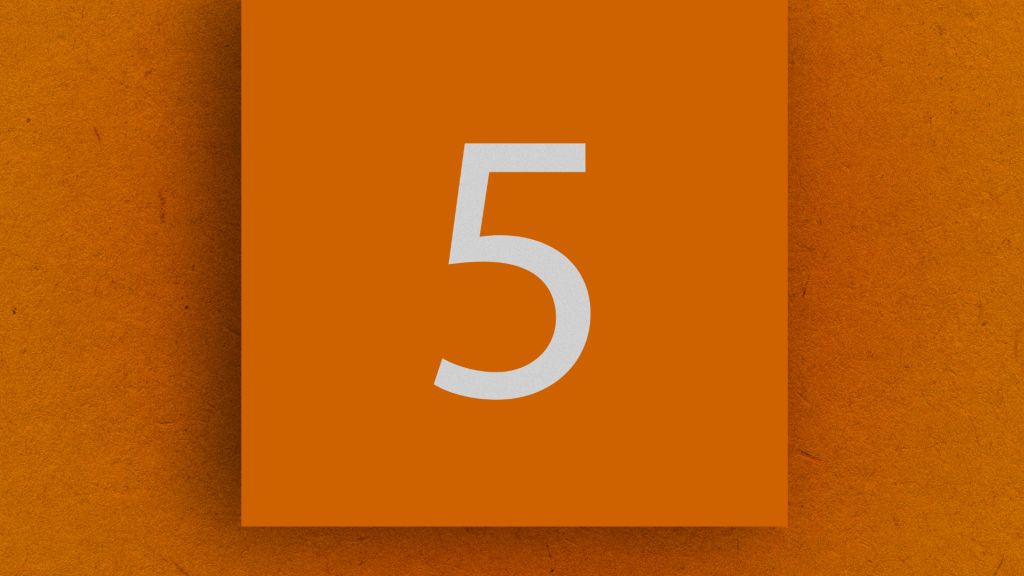
number
다섯
The number 5. It comes after four and before six.
Notice the silent 'e' at the end — 'five' sounds like /faɪv/, not /faɪvə/. Ordinal: fifth. Common use: 'five o'clock' for time, 'five-minute break', 'high five' (slapping hands together as a greeting).
'High five' (slapping your raised open hand against another person's) is a popular celebration gesture in English-speaking countries. 'Nine to five' means standard working hours. 'The five-second rule' is a humorous belief that food dropped on the floor is safe to eat within five seconds.
Example Sentences

"각 손에는 다섯 개의 손가락이 있습니다."
🇬🇧 "Each hand has five fingers."

"그녀는 개 다섯 마리를 산책시키고 있다."
🇬🇧 "She is walking five dogs."